


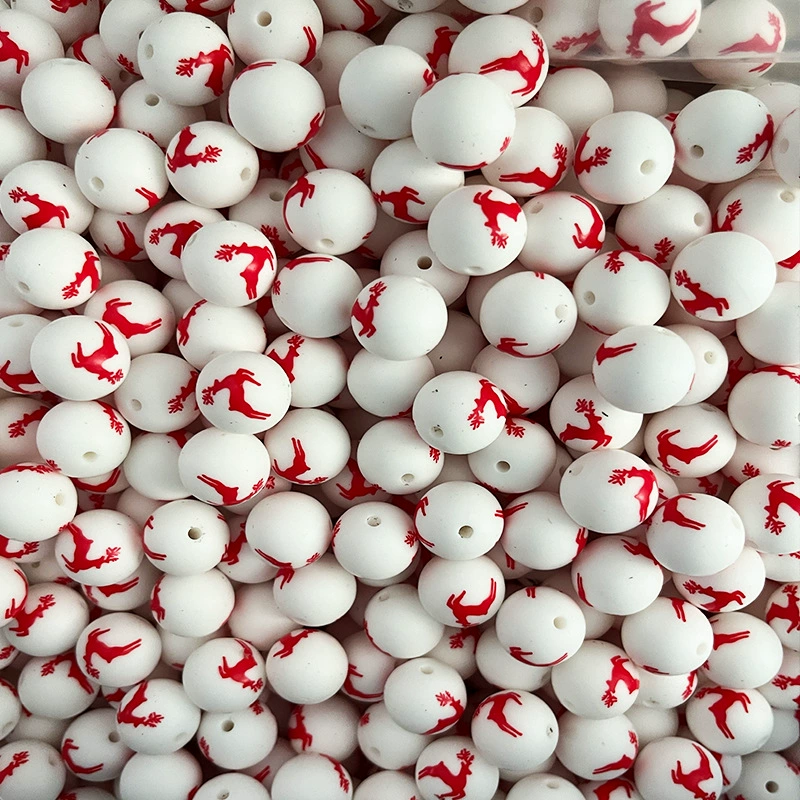
The temperature resistance range of high-temperature resistant silicone beads
Understanding the Temperature Resistance Range of High-Temperature Silicone Beads
High-temperature silicone beads are engineered to withstand extreme thermal conditions without compromising structural integrity or performance. These specialized materials are widely used in industries such as automotive, aerospace, electronics, and medical devices, where exposure to elevated temperatures is common. Below, we explore the factors influencing their heat resistance, typical operating ranges, and real-world applications.
Core Factors Determining Thermal Stability
The ability of silicone beads to endure high temperatures stems from their molecular composition and cross-linking density. Medical- and industrial-grade silicone beads are formulated with platinum-cured or peroxide-cured systems, which create stronger chemical bonds compared to standard silicone. This enhanced cross-linking reduces thermal degradation by minimizing chain scission—a process where polymer chains break under heat stress.
Another critical factor is the presence of fillers or additives. For instance, ceramic particles like alumina or silica can be incorporated to improve heat dissipation and reduce thermal expansion. These modifications allow silicone beads to maintain dimensional stability even when exposed to rapid temperature fluctuations.
Typical Temperature Resistance Ranges
High-temperature silicone beads are categorized based on their continuous and intermittent operating limits:
Continuous Operating Temperature
Most standard silicone beads resist continuous exposure to temperatures up to 200°C (392°F) without significant deformation or loss of mechanical properties. This makes them suitable for applications like engine gaskets, oven seals, and electronic component encapsulation, where sustained heat is a daily challenge.
Intermittent Peak Temperature Tolerance
When subjected to short-term heat spikes, silicone beads can often endure temperatures exceeding 250°C (482°F) for brief periods. This property is valuable in scenarios like automotive exhaust systems or industrial machinery, where components may experience transient thermal loads during operation.
Advanced Formulations for Extreme Environments
Specialized silicone compounds, such as fluorosilicone or phenyl-modified silicone, push these limits further. These variants can withstand continuous temperatures up to 300°C (572°F) and intermittent peaks near 350°C (662°F). Such formulations are critical in aerospace applications, where components must survive re-entry heating or jet engine exhaust.
Real-World Applications and Performance Considerations
Automotive Industry
Silicone beads are used in engine mounts, transmission seals, and cooling system hoses. Their ability to resist heat-induced hardening or softening ensures long-term reliability, even in high-performance vehicles. For example, a silicone bead sealing a turbocharger inlet must maintain flexibility at 220°C while preventing leaks under pressure.
Electronics and Electrical Systems
In electronic devices, silicone beads serve as thermal interface materials (TIMs) or potting compounds. They conduct heat away from sensitive components like CPUs or power transistors while insulating against electrical shorts. A smartphone’s battery enclosure might use silicone beads to protect against both overheating and moisture ingress.
Industrial Manufacturing
Food-grade silicone beads are employed in baking molds, conveyor belts, and sterilization equipment. These beads must withstand repeated cycles of heating and cooling without cracking or warping. A commercial oven’s door seal, for instance, relies on silicone’s thermal stability to maintain an airtight closure at 260°C.
Challenges and Limitations
Despite their robustness, high-temperature silicone beads have constraints. Prolonged exposure to temperatures beyond their rated range can cause:
- Oxidation: At temperatures above 250°C, silicone may react with atmospheric oxygen, leading to surface cracking or embrittlement.
- Thermal Shock: Rapid cooling after high-temperature exposure can induce stress fractures, especially in thick-walled beads.
- Chemical Degradation: Certain additives or environmental contaminants (e.g., sulfur compounds) may accelerate breakdown at elevated temperatures.
To mitigate these risks, engineers often pair silicone beads with protective coatings or design systems to distribute heat evenly. For example, a silicone bead in a solar panel might be shielded by a ceramic layer to reduce UV and thermal degradation.
Innovations in High-Temperature Silicone Technology
Researchers are continuously improving silicone’s heat resistance through novel material designs:
- Nanostructured Silicone: Incorporating graphene or carbon nanotubes enhances thermal conductivity while maintaining flexibility. This allows beads to dissipate heat faster, reducing localized hotspots.
- Self-Healing Polymers: Some experimental silicone formulations can repair minor cracks caused by thermal stress, extending service life in harsh environments.
- Hybrid Materials: Combining silicone with polyimide or polybenzimidazole (PBI) creates composites capable of surviving temperatures above 400°C, opening doors to nuclear or hypersonic applications.
Conclusion
High-temperature silicone beads offer a versatile solution for industries demanding reliability under thermal stress. Their ability to function across a wide temperature range—from -60°C to over 300°C—makes them indispensable in modern engineering. As material science advances, these beads will continue to evolve, meeting the ever-growing demands of high-performance applications while maintaining safety and cost-effectiveness.





Leave a reply