


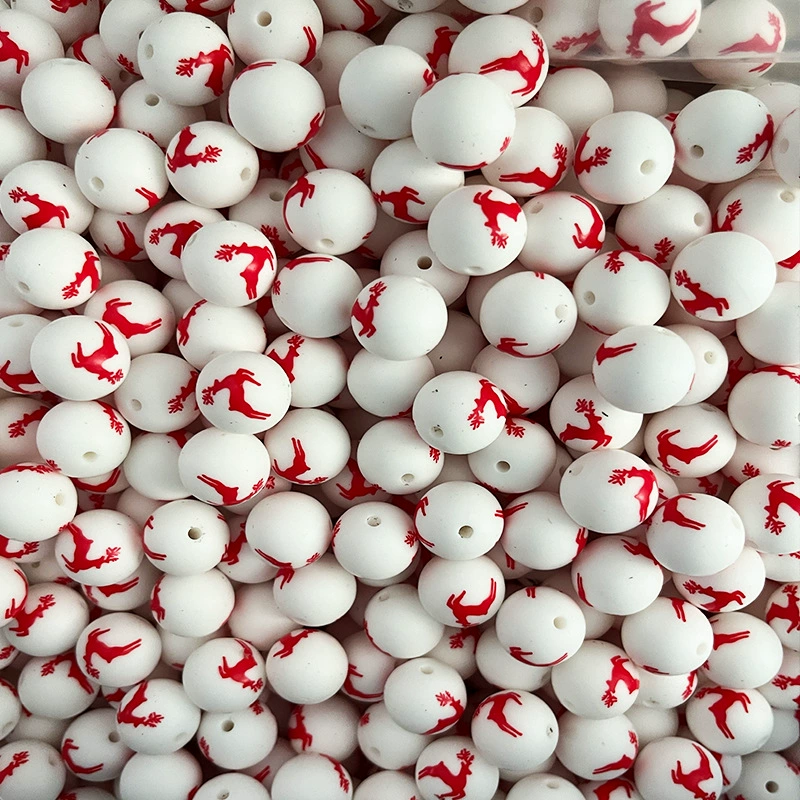
The touch characteristics of soft silicone beads
Understanding the Tensile Properties of High-Elastic Silicone Beads
High-elastic silicone beads are widely used in industries ranging from medical devices to industrial machinery due to their exceptional flexibility and durability. Their tensile properties—how they respond to stretching forces—are critical for ensuring performance and longevity. Below, we explore the key factors influencing their tensile behavior, testing methods, and real-world applications.
Molecular Structure and Elasticity
The tensile performance of high-elastic silicone beads stems from their unique molecular composition. Silicone, a polymer of silicon and oxygen atoms, forms a three-dimensional network with cross-linked chains. This structure allows the material to stretch significantly without breaking, as the chains can slide past one another while maintaining structural integrity.
When a silicone bead is stretched, the cross-links between polymer chains act as anchor points, preventing permanent deformation. The degree of cross-linking directly impacts elasticity: higher cross-link density increases stiffness, while lower density enhances flexibility. Manufacturers adjust this balance to create beads with specific tensile properties tailored to their intended use.
The glass transition temperature (Tg) of silicone also plays a role. Below Tg, the material becomes rigid, but high-elastic silicone beads are engineered to remain pliable at temperatures as low as -60°C (-76°F). This ensures consistent performance in extreme environments, such as cryogenic storage or outdoor winter applications.
Testing Methods for Tensile Properties
To evaluate the tensile behavior of high-elastic silicone beads, standardized testing methods are employed. These tests measure key metrics like tensile strength, elongation at break, and elastic modulus, providing insights into the material’s durability and flexibility.
Tensile Strength Measurement
Tensile strength is the maximum stress a material can withstand while being stretched before breaking. For silicone beads, this is typically tested using a universal testing machine (UTM). A sample bead is clamped at both ends and pulled at a constant speed until it fractures. The force required to break the bead is recorded and divided by its cross-sectional area to calculate tensile strength, usually expressed in megapascals (MPa).
High-elastic silicone beads often exhibit tensile strengths ranging from 4 MPa to 12 MPa, depending on their formulation. This range allows them to handle moderate to heavy loads without tearing, making them suitable for applications like vibration dampeners or shock absorbers.
Elongation at Break Analysis
Elongation at break measures how much a material can stretch before it breaks, expressed as a percentage of its original length. This metric is crucial for assessing flexibility. During testing, the UTM records the bead’s length at the moment of fracture. High-elastic silicone beads typically achieve elongation rates exceeding 300%, meaning they can stretch to over three times their original length without failing.
This high elongation capability is why silicone beads are preferred in dynamic environments, such as automotive components or wearable devices, where repeated stretching occurs. Their ability to return to their original shape after deformation ensures long-term functionality.
Elastic Modulus Determination
The elastic modulus, or Young’s modulus, quantifies a material’s stiffness by measuring the ratio of stress to strain during elastic deformation. A lower modulus indicates greater flexibility, while a higher modulus suggests rigidity. For high-elastic silicone beads, the modulus is carefully controlled during manufacturing to balance softness and strength.
Testing involves applying a small, incremental force to the bead and measuring the resulting deformation. The slope of the stress-strain curve in the elastic region gives the elastic modulus. Silicone beads designed for applications requiring frequent bending or compression, like medical tubing or gaskets, often have a lower modulus (0.1–1 MPa) to ensure comfort and ease of use.
Applications Leveraging Tensile Performance
The exceptional tensile properties of high-elastic silicone beads make them indispensable in various industries. Their ability to withstand stretching forces while maintaining flexibility and durability ensures reliable performance in demanding environments.
Medical Devices
In the medical field, silicone beads are used in catheters, endoscopes, and wearable sensors. Their high tensile strength and elongation allow these devices to navigate complex anatomical pathways without kinking or breaking. For example, a catheter with a silicone bead at its tip can bend sharply without compromising fluid flow, reducing patient discomfort and improving procedural success rates.
Additionally, silicone beads in wearable medical devices, such as glucose monitors or fitness trackers, must endure constant movement and stretching. Their low elastic modulus ensures they conform to the body’s contours without causing irritation, while their tensile strength prevents damage during physical activity.
Industrial Machinery
High-elastic silicone beads are critical components in vibration isolation systems for industrial machinery. They act as dampeners, absorbing and dissipating energy from vibrating parts like motors, pumps, or compressors. Their ability to stretch and compress repeatedly without losing elasticity ensures long-term vibration reduction, extending equipment lifespan and reducing noise levels.
For instance, in a manufacturing plant, silicone beads placed between a machine’s base and the floor can reduce vibrations by up to 90%, preventing structural damage and improving worker comfort. Their tensile properties also make them suitable for use in conveyor belts, where they help maintain tension and prevent slippage.
Consumer Products
In consumer goods, high-elastic silicone beads enhance product durability and user experience. They are commonly found in stress-relief toys, where their ability to stretch and return to shape provides satisfying tactile feedback. Similarly, in sports equipment like resistance bands or yoga straps, silicone beads ensure consistent tension and resistance, supporting safe and effective workouts.
The food and beverage industry also relies on silicone beads for their hygienic properties and tensile resilience. In beverage dispensers, silicone beads in seals and gaskets prevent leaks by maintaining a tight fit even under pressure changes. Their resistance to chemicals and high temperatures ensures they remain intact during cleaning cycles, reducing contamination risks.
Factors Influencing Tensile Performance
Several variables affect the tensile properties of high-elastic silicone beads, from material composition to environmental conditions. Understanding these factors helps manufacturers optimize beads for specific applications.
Material Composition
The type and amount of additives in silicone beads significantly impact their tensile behavior. Fillers like silica or carbon black can increase tensile strength but may reduce elongation if overused. Conversely, plasticizers enhance flexibility but can lower overall strength. Balancing these additives is key to achieving the desired combination of softness and durability.
For example, a silicone bead formulated for medical use might contain biocompatible fillers to improve strength without compromising safety, while an industrial bead could include abrasion-resistant additives for extended wear in harsh environments.
Curing Process
The curing, or vulcanization, process during manufacturing determines the degree of cross-linking in silicone beads. Longer curing times or higher temperatures typically result in more cross-links, increasing tensile strength but reducing elongation. Manufacturers adjust curing parameters to fine-tune the beads’ mechanical properties for their intended application.
For instance, a silicone bead used in a high-vibration environment might undergo a longer curing cycle to maximize stiffness and reduce deformation, while a bead in a flexible medical device could have a shorter cure time to maintain softness.
Environmental Conditions
Temperature and exposure to chemicals can alter the tensile properties of silicone beads over time. While high-elastic silicone is generally stable across a wide temperature range, extreme heat or cold can temporarily or permanently affect its elasticity. Similarly, prolonged contact with oils, solvents, or UV radiation may degrade the material, reducing tensile strength and elongation.
To mitigate these effects, manufacturers may incorporate stabilizers or protective coatings into the silicone formulation. For example, a bead used outdoors might include UV inhibitors to prevent degradation from sunlight, while a bead in a chemical-heavy environment could be treated with a barrier layer to resist corrosion.
Conclusion
High-elastic silicone beads owe their exceptional tensile properties to their unique molecular structure, which allows them to stretch significantly without breaking. Through rigorous testing methods like tensile strength, elongation at break, and elastic modulus analysis, manufacturers ensure these beads meet the demands of diverse applications. From medical devices to industrial machinery and consumer products, their ability to withstand stretching forces while maintaining flexibility makes them invaluable components in modern technology. By understanding the factors influencing their tensile performance, engineers and designers can select or customize silicone beads to optimize functionality and durability in any setting.



Leave a reply