


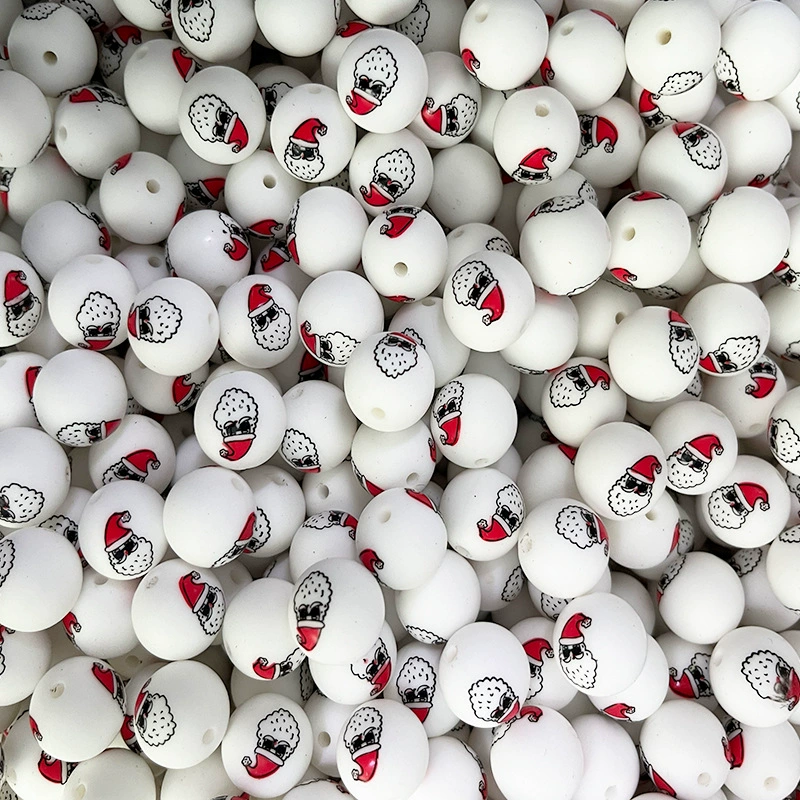
The durable characteristics of wear-resistant silicone beads
Durability Characteristics of Wear-Resistant Silicone Beads
Wear-resistant silicone beads are engineered to withstand repetitive mechanical stress while maintaining structural integrity, making them indispensable in industrial and consumer applications. Their durability stems from advanced material formulations, optimized molecular structures, and specialized manufacturing processes. Below, we explore the core factors contributing to their longevity and performance.
Molecular Structure and Cross-Link Density
The durability of silicone beads is heavily influenced by their molecular architecture. Silicone, a polymer composed of silicon-oxygen (Si-O) backbone chains, gains elasticity and strength through cross-linking between chains. High cross-link density creates a rigid network that resists deformation, while moderate cross-linking balances flexibility with toughness. For wear-resistant applications, manufacturers adjust cross-link density to ensure beads can absorb impact without cracking. For instance, beads used in vibrating screens for mineral processing are formulated with higher cross-link densities to endure constant collisions with screen surfaces.
The presence of reinforcing fillers, such as silica nanoparticles, further enhances durability. These fillers integrate into the polymer matrix, increasing tear strength and reducing wear rates. Studies show that silicone beads reinforced with 30–50% silica by weight exhibit up to 40% higher abrasion resistance compared to unfilled variants. This makes them suitable for environments where friction and impact are frequent, such as conveyor systems or automotive components.
Hardness and Elastic Modulus
Silicone beads are available in a range of hardness levels, typically measured on the Shore A scale (10–90). Wear-resistant beads often fall within the 40–70 Shore A range, offering a balance between softness and rigidity. Softer beads (e.g., 40 Shore A) conform to irregular surfaces, distributing stress evenly and reducing localized wear. Harder beads (e.g., 70 Shore A) resist indentation and puncture, making them ideal for high-load applications like industrial machinery seals.
Elastic modulus, a measure of stiffness, also plays a role. Beads with a moderate elastic modulus (0.5–2 MPa) deform under pressure but return to their original shape, preventing permanent damage. This property is critical in dynamic environments, such as vibration isolation systems, where beads must absorb energy without losing resilience. For example, silicone beads used in automotive engine mounts maintain their shape despite constant vibration, ensuring long-term stability.
Environmental and Chemical Resistance
Wear-resistant silicone beads are designed to perform under extreme conditions. Their thermal stability allows them to operate in temperatures ranging from -60°C to 300°C without degrading. This makes them suitable for applications like aerospace components, where beads must endure rapid temperature fluctuations, or food processing equipment, where exposure to steam and cold is common.
Chemical resistance is another key factor. Silicone beads are inert to most acids, bases, and solvents, preventing swelling or corrosion. This property is vital in chemical manufacturing, where beads are used as seals or gaskets in reactors and storage tanks. Additionally, their hydrophobic nature repels water and oils, reducing the risk of degradation from moisture or lubricants. For instance, beads in marine equipment remain functional despite prolonged exposure to saltwater.
Surface Finish and Microstructure
The surface quality of silicone beads significantly impacts their wear resistance. Smooth, defect-free surfaces minimize friction and prevent the initiation of cracks. Manufacturers achieve this through precision molding and post-curing processes that eliminate surface imperfections. Beads with a matte finish are often preferred in high-friction applications, as they reduce adhesion between contacting surfaces.
Microstructural uniformity also enhances durability. Beads with consistent particle size distribution and minimal voids exhibit better load-bearing capacity. Advanced manufacturing techniques, such as injection molding and liquid silicone rubber (LSR) casting, ensure uniformity by controlling material flow and curing conditions. This is particularly important in medical devices, where beads must meet strict biocompatibility and performance standards.
Applications Leveraging Durability
The durability of silicone beads enables their use in demanding industries. In mining and mineral processing, beads are used as vibrating screen cleaners, where they repeatedly bounce against screen meshes to prevent clogging. Their wear resistance ensures they remain effective for thousands of hours, reducing downtime and maintenance costs.
In automotive manufacturing, silicone beads serve as shock absorbers in suspension systems and as seals in engine components. Their ability to withstand vibration, heat, and chemicals ensures reliable performance over the vehicle’s lifespan. Similarly, in consumer electronics, beads are used as tactile feedback elements in keyboards and touchscreens, where their durability ensures consistent operation despite frequent use.
The medical field also benefits from wear-resistant silicone beads. Their biocompatibility and resistance to sterilization methods make them ideal for implants, prosthetics, and drug-delivery devices. For example, beads used in insulin pumps must endure repeated compression cycles without cracking, ensuring accurate dosage delivery.
Maintenance and Longevity Factors
To maximize the lifespan of wear-resistant silicone beads, proper maintenance is essential. Avoiding exposure to sharp objects and excessive loads prevents surface damage. Regular cleaning with mild detergents removes contaminants that could accelerate wear. In high-temperature environments, ensuring adequate ventilation prevents heat buildup, which can soften the material over time.
Storage conditions also affect durability. Beads should be kept in a cool, dry place away from direct sunlight and chemicals. Using airtight containers prevents moisture absorption, which can lead to swelling or reduced elasticity. For long-term storage, rotating inventory ensures beads are used before their shelf life expires, typically 5–10 years for high-quality silicone.
By understanding the molecular, structural, and environmental factors influencing durability, engineers and designers can select or customize silicone beads to meet specific application requirements. Their versatility and resilience make them a preferred choice in industries where reliability and longevity are paramount.




Leave a reply