


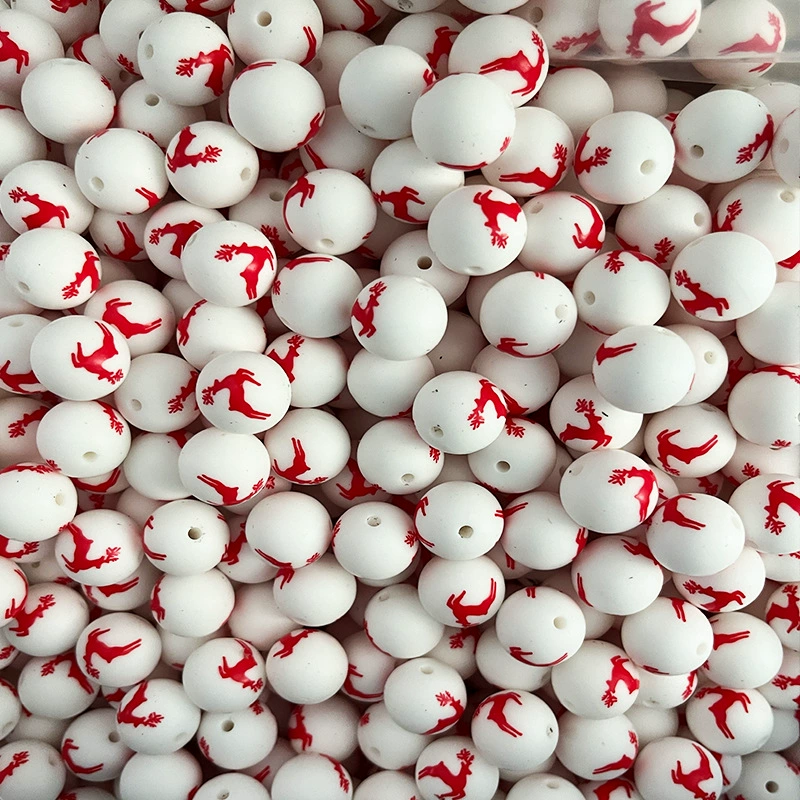
Color-matching techniques for mixed-color silicone beads
Color Mixing Techniques for Silicone Beads: A Comprehensive Guide
Creating vibrant, consistent colors in silicone beads requires a blend of scientific principles and practical expertise. Unlike opaque materials, silicone’s translucent nature demands precise control over pigment ratios and mixing methods to achieve desired hues. This guide explores core techniques for mastering silicone bead coloration, from foundational theory to advanced adjustments.
Understanding Color Theory for Silicone Applications
Silicone color mixing operates on subtractive color principles, where pigments absorb specific wavelengths of light. The primary colors—cyan, magenta, and yellow—form the basis for all other hues. Secondary colors emerge by combining two primaries: red-orange (magenta + yellow), green (cyan + yellow), and violet (cyan + magenta). Tertiary colors, such as teal or coral, require mixing a primary with a secondary.
A critical factor in silicone is its base transparency. Unlike solid plastics, silicone’s semi-translucency alters perceived color intensity. For example, adding 1% yellow pigment to transparent silicone produces a pale pastel, while the same ratio in an opaque base yields a bold shade. This necessitates higher pigment loads for deep colors and careful layering for gradients.
Core Mixing Methods for Silicone Beads
Masterbatch Technique
The masterbatch method involves pre-mixing pigments with a small portion of silicone to create a concentrated color paste. This paste is then blended into the main silicone batch at a calculated ratio. For instance, to produce 1kg of lavender silicone, a technician might mix 50g of a violet masterbatch (containing 80% magenta and 20% cyan pigments) with 950g of clear silicone. This approach ensures uniform color distribution and reduces waste.
Stepwise Addition Approach
When developing custom colors, the stepwise method allows incremental adjustments. Begin with a base silicone sample and add pigments in 0.1% increments, recording each modification. For example, creating a forest green might involve starting with 2% cyan, then slowly introducing yellow until the desired balance is achieved. Documenting each step creates a referenceable formula for future batches.
Layering for Gradient Effects
To achieve ombré or multi-toned beads, layer differently colored silicone batches during molding. Pour a base layer (e.g., light blue), let it partially cure, then add a second layer (e.g., dark blue) on top. The partial curing prevents full blending while allowing a smooth transition. This technique requires precise timing and temperature control to avoid interface distortion.
Overcoming Common Challenging Scenarios
Addressing Color Inconsistency
Inconsistent pigment dispersion often stems from inadequate mixing time or improper equipment. Use a high-shear mixer for at least 10 minutes to break up pigment aggregates. For hand-mixing, fold the silicone repeatedly against a clean surface until no streaks remain. Testing swatches under multiple light sources (e.g., daylight vs. LED) helps identify subtle variations early.
Correcting Over-Saturated Hues
If a color appears too intense, avoid adding white pigment, which can create a chalky appearance. Instead, introduce a complementary color to neutralize the excess. For example, to tone down an overly vibrant orange, add a small amount of cyan (the complement of red, a component of orange). This subtractive approach maintains color purity better than dilution.
Adjusting for Material Type
Different silicone formulations (e.g., addition-cure vs. condensation-cure) interact uniquely with pigments. Addition-cure silicones require platinum-compatible pigments to prevent inhibition, while condensation-cure types tolerate a broader range of additives. Always verify pigment compatibility with the silicone base to avoid curing issues.
Advanced Strategies for Precision
Spectrophotometer Integration
Using a spectrophotometer to measure color values (Lab* coordinates) enables objective comparisons between batches. Input target values into software to generate precise pigment ratios. For example, matching a Pantone 18-1230 TCX (Bright Coral) might require 62% magenta, 35% yellow, and 3% white, adjusted based on silicone transparency.
Environmental Considerations
Light and heat exposure can shift silicone colors over time. UV-stable pigments resist fading in outdoor applications, while heat-resistant formulations maintain integrity during molding. Store pigmented silicone in cool, dark conditions to preserve color accuracy between production cycles.
Recycling and Sustainability
Reclaiming off-cuts or defective beads for re-melting requires adjusting pigment ratios to compensate for color degradation. Add 5–10% more pigment to recycled silicone to counteract fading from previous curing cycles. This practice reduces waste while maintaining color consistency across batches.
Mastering silicone bead coloration demands patience, precision, and a willingness to experiment. By combining theoretical knowledge with iterative testing, artisans and manufacturers can unlock endless creative possibilities while ensuring product quality.
Leave a reply