


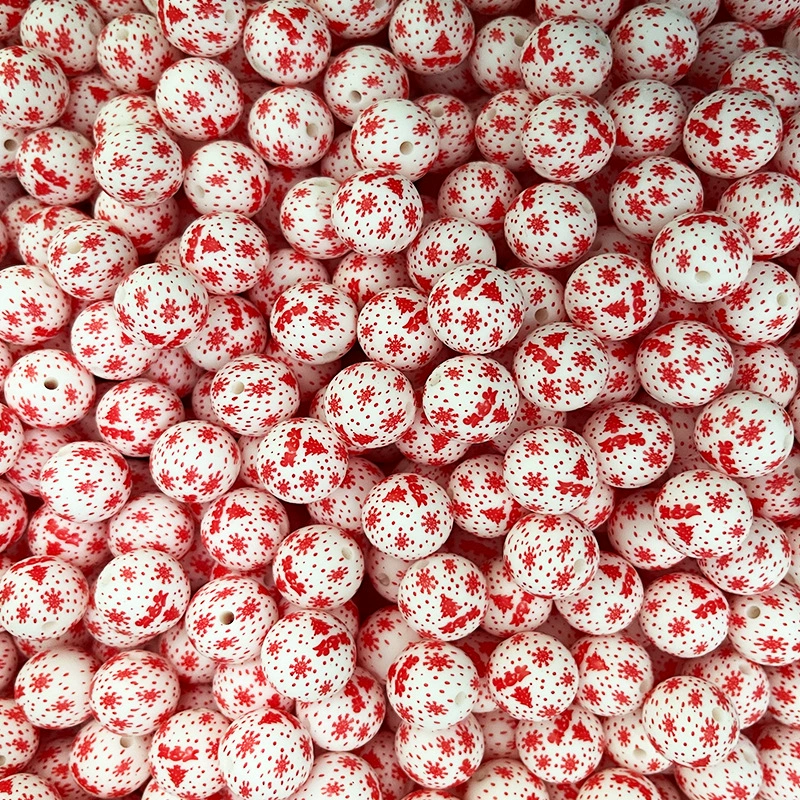
Safety standards for silicone beads for infants
Safety Standards for Silicone Beads Used in Infant Products
Silicone beads are widely used in infant products such as teething necklaces, pacifier clips, and sensory toys due to their soft texture and durability. However, ensuring their safety requires strict adherence to international standards and material specifications. Below is a detailed breakdown of the key safety criteria for silicone beads in infant applications.
Material Composition and Certifications
Infant-grade silicone beads must be made from food-grade or medical-grade silicone, which is free from toxic substances like heavy metals, phthalates, and bisphenol A (BPA). These materials must comply with certifications such as FDA (U.S. Food and Drug Administration), LFGB (German Food, Commodities, and Feed Code), or GB 4806.11 (China’s food-grade silicone standard). These certifications ensure that the beads do not release harmful chemicals when chewed, sucked, or exposed to high temperatures during sterilization.
For oral-contact products like teething beads, additional compliance with ISO 10993 (biocompatibility standards for medical devices) is required. This includes cytotoxicity tests to confirm that the material does not cause irritation or tissue damage when in contact with an infant’s sensitive gums or skin.
Physical and Mechanical Properties
Infant silicone beads must withstand rigorous physical testing to prevent choking or injury risks. Key parameters include:
- Tensile Strength: Beads should resist tearing or breaking under pressure. Tests like ASTM D624 require a minimum tensile strength of 4N/mm² to ensure they do not rupture during chewing.
- Compression Set: After repeated compression (e.g., from an infant’s bite), the beads should recover their original shape. A compression permanent deformation rate of less than 5% (tested via GB/T 7759) ensures long-term usability.
- Surface Smoothness: The beads’ surface roughness must meet ISO 4287 standards (Ra ≤ 0.8μm) to prevent bacterial growth in crevices and avoid skin irritation.
- Size and Shape: Beads should be large enough (typically >25mm in diameter) to prevent choking, with no small detachable parts. Edges must be rounded to avoid cuts or abrasions.
Thermal and Chemical Resistance
Infant silicone beads must endure extreme temperatures without degrading. They should withstand:
- High-Temperature Sterilization: Repeated exposure to steam (120°C–130°C) or boiling water (100°C) without yellowing, cracking, or losing elasticity.
- Low-Temperature Flexibility: Maintain functionality at -40°C to prevent brittleness in cold environments.
- Chemical Stability: Resist discoloration or odor release when exposed to cleaning agents like baby-safe detergents or diluted alcohol solutions.
Chemical Safety and Restrictions
Strict limits apply to harmful substances in infant silicone beads:
- Heavy Metals: Migration tests (e.g., EN 71-3) restrict lead to ≤90mg/kg, cadmium to ≤30mg/kg, and nickel release to safe levels for skin contact.
- Phthalates: Prohibited in infant products under regulations like REACH (EU) and CPSIA (U.S.), which limit six key phthalates (DEHP, DBP, BBP, etc.) to ≤0.1% each.
- Volatile Organic Compounds (VOCs): Total VOC content must remain below 50μg/g after high-temperature sterilization to prevent respiratory irritation.
- Additives: Colorants must comply with EN 71-3 or ASTM F963, ensuring no harmful dyes or pigments are used.
Microbial Safety and Hygiene
Silicone beads must resist microbial growth to protect infants from infections. Tests include:
- Antimicrobial Efficacy: Optional addition of safe agents like nano-silver ions to achieve >99% inhibition of bacteria (ISO 22196).
- Water Vapor Permeability: A rate >200g/(m²·24h) prevents moisture retention, reducing mold risk.
- Cleanability: Smooth surfaces should allow easy removal of saliva, food residues, or dirt with mild soap and water.
Labeling and Compliance
Manufacturers must provide clear labeling on packaging, including:
- Material Type: Explicitly state “food-grade silicone” or “medical-grade silicone.”
- Age Recommendations: Specify suitable age ranges (e.g., “for infants 0–3 years”).
- Care Instructions: Guide users on sterilization methods (e.g., boiling, steam, or UV-C light) and frequency.
- Certification Marks: Display logos for FDA, LFGB, or other relevant standards to assure compliance.
By adhering to these standards, manufacturers and caregivers can ensure that silicone beads used in infant products are safe, durable, and hygienic, minimizing risks to children’s health and well-being.


Leave a reply