

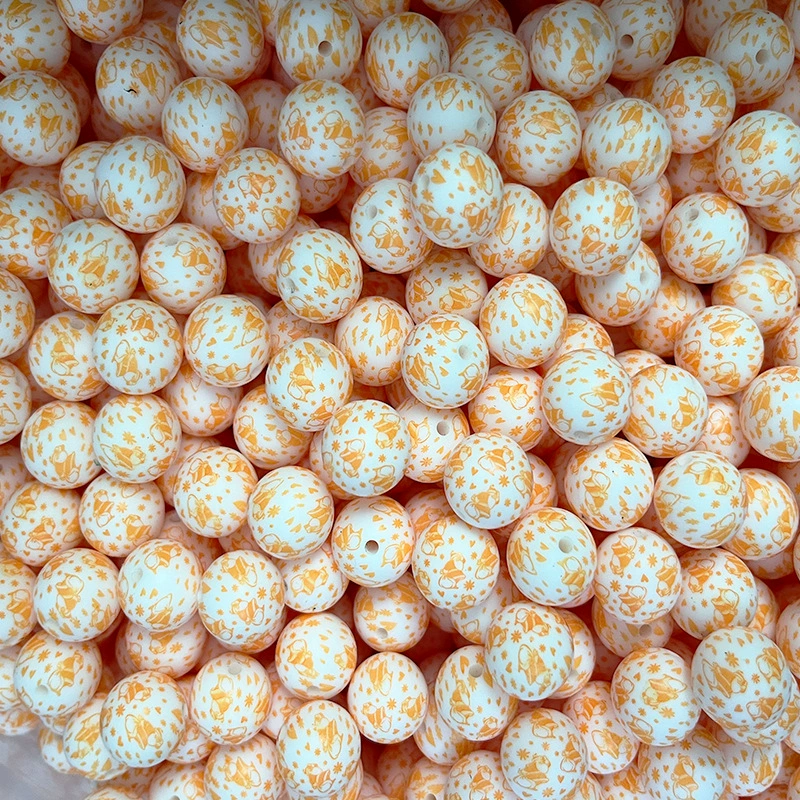
Anti-color fading silicone bead dyeing process
Colorfast Dyeing Techniques for Silicone Beads
Silicone beads are widely used in consumer products, medical devices, and industrial components due to their durability and flexibility. However, achieving vibrant, long-lasting colors without compromising performance requires specialized dyeing processes. This guide explores the core methods and considerations for producing fade-resistant silicone beads.
Core Dyeing Methods for Silicone
Masterbatch Integration
The most common approach involves incorporating silicone masterbatches—pre-colored compounds combining silicone base materials, pigments, and dispersants—during the mixing stage. These masterbatches are engineered for uniform color distribution and chemical stability. Unlike liquid dyes, they eliminate the risk of uneven coloring caused by poor dispersion.
For instance, inorganic pigments like iron oxides (red, yellow, black) and chromium oxides (green) are preferred for their heat resistance and lightfastness. Organic pigments, while offering brighter hues, require encapsulation technology to prevent migration or fading under UV exposure. Manufacturers often blend multiple pigments to achieve specific shades while maintaining colorfastness.
Solid-Phase Mixing with Pre-Dispersed Pigments
To avoid dust pollution and improve efficiency, pre-dispersed pigments in wax or resin carriers are increasingly used. These pigments undergo surface treatment with fatty acids or silanes to enhance compatibility with silicone matrices. During mixing, the carrier melts, releasing finely ground pigment particles that bond chemically with the silicone chains.
This method reduces the risk of color streaks or speckling, which are common when using raw powder pigments. It also allows for precise color control, as the pigment concentration can be adjusted without altering the base formulation. For example, a 2% load of pre-dispersed blue pigment may yield deeper color saturation than 5% of untreated powder due to better dispersion.
Liquid Injection Molding with Color Concentrates
For liquid silicone rubber (LSR) beads, color concentrates are added to the B-component (crosslinker) before injection molding. This ensures homogenous coloring throughout the bead’s structure, even in complex geometries. The key advantage is the ability to produce multi-colored beads in a single cycle by using multiple injection gates or layered molds.
To prevent cure inhibition—a common issue when organic pigments interfere with platinum-catalyzed LSR systems—manufacturers use additives like hydroxyl-terminated silicone fluids or specialized stabilizers. These additives neutralize reactive groups on pigment surfaces, ensuring complete vulcanization without compromising color integrity.
Key Factors Influencing Colorfastness
Pigment Selection and Compatibility
The choice of pigment directly impacts fade resistance. Inorganic pigments generally outperform organic ones in outdoor applications due to their superior thermal stability (withstanding temperatures up to 300°C) and lightfastness (rated 7–8 on the Blue Wool Scale). However, organic pigments like phthalocyanines (blue, green) can achieve comparable performance when encapsulated in silica or polymer matrices.
Compatibility testing is critical. Pigments must resist migration into adjacent materials (e.g., plastics or adhesives) and avoid chemical reactions with silicone additives like plasticizers or flame retardants. For example, cadmium-based pigments, though vibrant, are avoided in medical-grade beads due to toxicity concerns.
Curing Process Optimization
The vulcanization temperature and time significantly affect color retention. Over-curing can degrade pigments, especially organic varieties, leading to fading or discoloration. Under-curing, meanwhile, results in incomplete crosslinking, reducing the bead’s mechanical strength and allowing pigments to leach out over time.
Manufacturers use differential scanning calorimetry (DSC) to determine the optimal cure profile for each pigment-silicone combination. For instance, a bead containing iron oxide may require a 10-minute cure at 150°C, while a phthalocyanine-based bead might need 15 minutes at 120°C to balance color stability and physical properties.
Post-Dyeing Treatments
Surface coatings can enhance colorfastness by creating a barrier against abrasion, UV light, and chemicals. Silicone-based coatings, applied via dipping or spraying, provide hydrophobic properties that repel water and oils, preventing pigment extraction. For medical-grade beads, plasma treatments are used to modify the surface chemistry, improving pigment adhesion without introducing toxic substances.
Another approach is to incorporate UV stabilizers like hindered amine light stabilizers (HALS) or benzotriazoles into the pigment formulation. These additives absorb UV radiation and convert it into harmless heat, extending the bead’s color lifespan by up to 50% in outdoor environments.
Applications Demanding High Colorfastness
Medical and Wearable Devices
Silicone beads used in prosthetics, orthotics, or fitness trackers must resist fading from sweat, cleaning agents, and prolonged UV exposure. For example, a wristband bead exposed to daily sunlight and chlorinated pool water requires pigments rated for 1,000+ hours of accelerated weathering testing (equivalent to 5–10 years of real-world use).
Automotive and Aerospace Components
Beads in engine compartments or exterior trim must withstand temperatures exceeding 200°C and exposure to oils, fuels, and road salts. Inorganic pigments like titanium dioxide (white) or carbon black are preferred for their thermal stability, while specialized coatings protect against hydrocarbon-induced fading.
Consumer Electronics Accessories
Charging cable beads or phone case decorations demand vibrant colors that resist fading from hand oils, heat generated by devices, and bending cycles. Liquid silicone molding with color concentrates ensures consistent hues even in thin-walled beads, while post-cure treatments enhance scratch resistance.
By combining advanced pigment technology, precise process control, and protective coatings, manufacturers can produce silicone beads that retain their color integrity across diverse applications. Understanding the interplay between pigment chemistry, curing parameters, and environmental factors is essential for achieving optimal results.
Leave a reply